
Facilitation is a powerful leadership tool that is often overlooked.
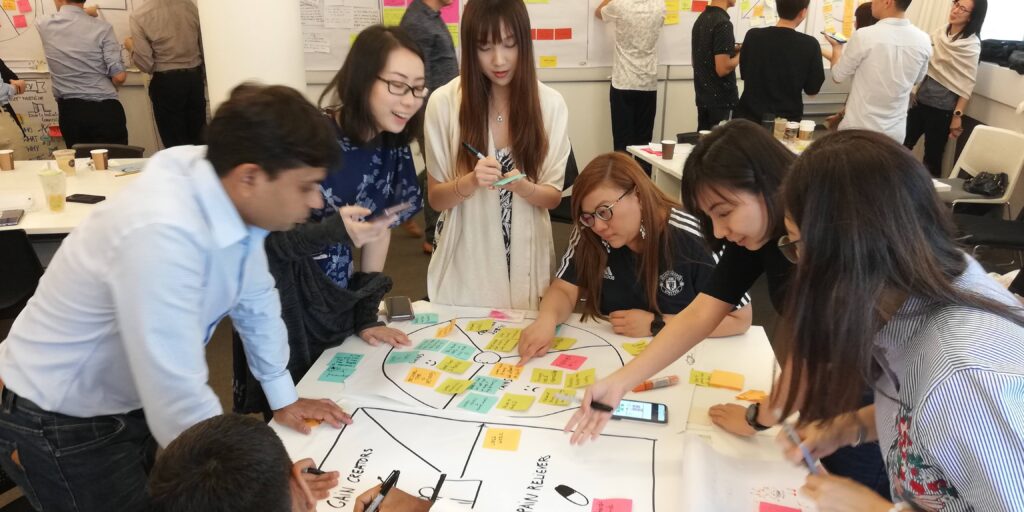
At its core, facilitation is the process in which a person, the facilitator, plans, diagnoses and intervenes to help a group improve how it defines and solves problems, ultimately enhancing its decision-making and effectiveness. The facilitator is someone whose selection is acceptable to all members, is unbiased, and has no decision-making authority (Remember, we focus on leadership as someone who inspires and leads others, not someone with authority).
Facilitation improves effectiveness
What’s the least amount of effort that will generate the best possible outcome? That’s the question that the facilitator is answering.
This process begins long before the meeting starts, involving meticulous planning and design. The 7 Ps of Facilitation provide a solid framework:
Purpose – Why are we having this meeting or workshop? As a leader/facilitator, you should be able to state the reason for the meeting clearly.
Product – What’s the expected output or artefact expected at the end of the meeting?
People – Who needs to be there and what role will they play? Who shouldn’t be there?
Process – This is where the leader facilitator will spend most of their time, defining not just the agenda, but the activities and activities. We’ll discuss this step in more detail, in the Facilitator’s Toolbox below.
Preparation – What prep work will make this a success? How can I empower people before the meeting? What information do I need before starting? Who should I consult?
Practical Concerns – Consider logistics, technology, and contingencies.
Pitfalls – What could go wrong? Anticipate potential issues and plan mitigations.
The Facilitator’s Toolbox
Different groups and contexts require different facilitation tools. Factors like time, participant ownership, and knowledge level influence tool selection.
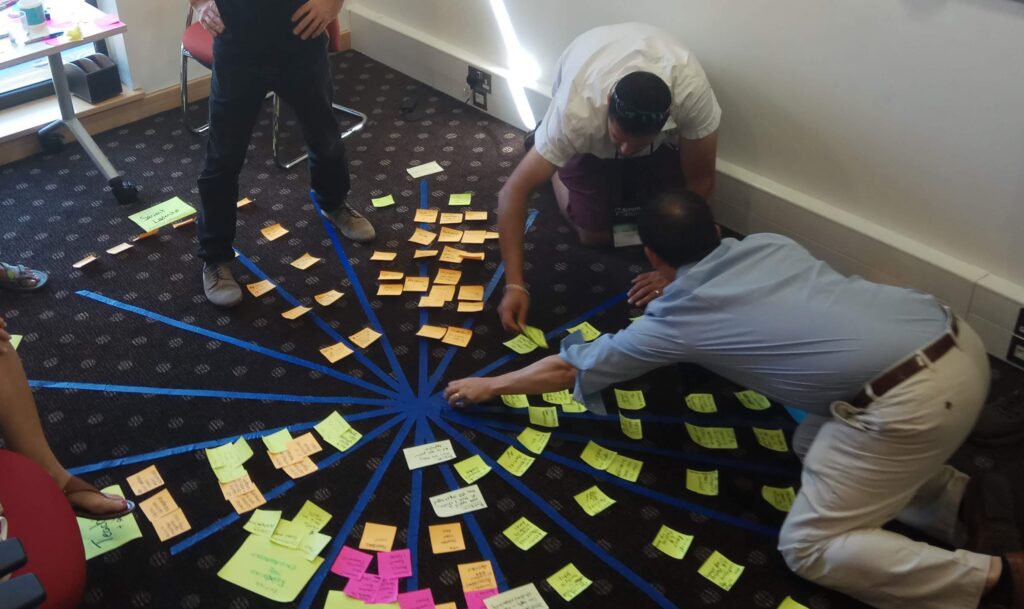
One of my favourite tools for brainstorming is called “1-2-4-all”, where, after the problem/question has been formulated, participants:
- first, generate ideas individually,
- then they discuss and combine their ideas in pairs,
- pairs merge to form groups of four,
- where finally, all ideas are presented by each quad to the whole group and a decision can be made.
In facilitation, context is everything. Want to generate and sift through the ideas of a large group? You may use 25/10 Crowd Sourcing. Want to discuss a specific topic with a large group but don’t want to break down into small groups? Fishbowl. Do you need to deep-dive into ideas and think from all possible angles? Six Thinking Hats.
Familiarity with various facilitation tools enables better design for specific contexts. Explore more tools through these resources:
The Path to Mastery
Beginner facilitators might find the concept of Shu-Ha-Ri useful. Initially, follow instructions closely (Shu). As you gain experience, start experimenting and combining facilitation strategies (Ha). Eventually, develop your own unique facilitation tools and style (Ri).
Facilitation improves inclusion and diversity of ideas
A key aspect of facilitation is inclusion. Effective facilitators ensure all voices are heard, creating a psychologically safe environment where everyone can contribute.
I’ve been in many meetings where the decision maker and other extroverts in the room engage in heated dialogues, giving no space for others in the room, either because they simply want to be right or because they make no efforts in creating a psychologically safety environment.
I’ll be direct here: the corporate world is the world of extroverts. In her book Quiet: The Power of Introverts in a World That Can’t Stop Talking, the author, Susan Cain, highlights how when a team has both extroverted and introverted, decisions are usually made by extroverts because they are more vocal. A good facilitator ensures that the best ideas, regardless of the source, are considered.
Conclusion
Facilitation is an adaptable and experimental process that, when done well, significantly enhances group effectiveness. Thus, great leaders are expert facilitators, gathering inclusive input and making the best decisions efficiently.
Great leaders are expert facilitators, transforming ordinary meetings into dynamic, inclusive, and highly effective sessions. By harnessing the power of facilitation, they tap into the collective intelligence of their teams, fostering an environment where every voice is heard and valued. This skill not only enhances decision-making but also drives innovation and collaboration.
Remember, facilitation is not just a process; it’s a science of leading without authority and guiding without dictating. As you master it, you’ll not only elevate your leadership but also empower those around you to achieve their fullest potential. Start integrating facilitation into your leadership practice today.

Hi, I'm Andre Rubin
I'm a Leadership Coach with 17 years of experience in IT and working with 200+ leaders like you for 7 years to unlock their full potential.Book a free call
Heart of Leadership Series

Jul. 14, 2025
Heart of Leadership Series

Jul. 15, 2025
Listening – Essential Leadership Skill #1

Jul. 23, 2025
Mentoring and Coaching

Jul. 23, 2025
Cultivating Leadership Excellence: A Guide to Developing Others

Jul. 23, 2025
Vision: The Most Inspiring Leadership Skill

Jul. 23, 2025